

Knob and Tube Wiring: Your Honest Guide to Safe Removal
For over 25 years, we've been helping families say goodbye to outdated knob and tube wiring. Honest advice, fair prices, ESA-certified, insurance-friendly. Free quotes.
Hello there, it's Jeff from Inline Electric. For over 25 years, I've been crawling through attics and basements in Kitchener-Waterloo, Cambridge, and now Woodstock, helping families like yours say goodbye to that quirky old knob and tube wiring. You know, the stuff that's been powering homes since your grandparents' era? It's like that reliable old truck — it got the job done back then, but now it's time for an upgrade before it leaves you stranded (or worse, shocked!). We're all about honesty: no upselling, fair prices, top-notch quality, and we clean up like we were never there. We've built lasting friendships with homeowners, local businesses, and trades pros because we treat every job like it's our own house.
First things first — check out this quick podcast from the Ontario Electrical Safety Authority (ESA). It's a no-nonsense intro to knob and tube and why it's worth addressing.
Got questions after listening? Give me a call at 519-740-9999 for a free, no-pressure quote. We service Kitchener-Waterloo, Cambridge, and Woodstock with the same straightforward approach.
As the ESA explains in their resources, regular checks by a licensed contractor keep things safe.

What Exactly is Knob and Tube Wiring?
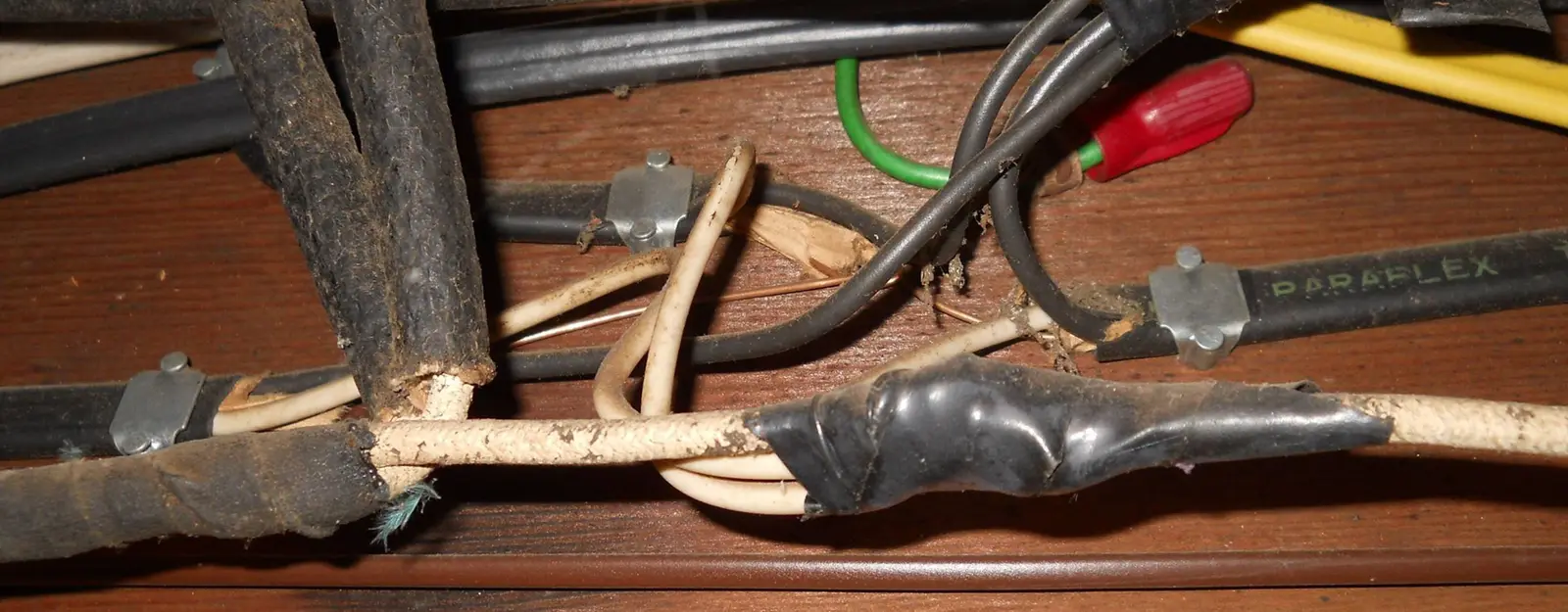
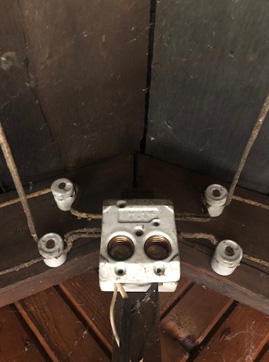
Knob and tube (K&T) wiring was the go-to system from the late 1800s right up to the 1940s — think Victorian and wartime homes scattered across Kitchener-Waterloo's Victoria Park neighbourhood or Cambridge's older mill districts. It's made of individual copper wires wrapped in cloth or rubber insulation, run through porcelain tubes (for protection where they pass through wood) and supported by those iconic ceramic knobs nailed to joists. No ground wire, no fancy sheathing — just raw, separated hot and neutral lines to keep things cool and safe in its day.
While it was innovative when electricity was new (imagine flipping a switch instead of lighting gas lamps!), it's not built for today's power-hungry world. We're talking EVs in Woodstock driveways, home offices in Cambridge basements, and smart appliances everywhere. K&T just can't handle the load without risking overloads. A full replacement typically includes a panel upgrade and sometimes a service entrance upgrade to bring your home up to current ESA standards.

11 Telltale Signs Your Home Still Has Knob and Tube
If your house was built before 1950 (common in our neck of the woods — hello, historic Woodstock bungalows!), keep an eye out for these clues.
Those two-prong plugs that make your three-prong adapters feel like a hack? Classic K&T.
Peek in the basement or attic — if wires look like they're wearing old-timey fabric insulation, bingo.
White porcelain insulators nailed to beams or poking through floors. They look antique, but they're a red flag.
Your wiring might be struggling with modern demands.
Old systems overload easily — not fun during a Kitchener-Waterloo snowstorm.
Charming, but a giveaway from the early 1900s.
Bathrooms and kitchens often reveal ungrounded setups.
If someone's blown in insulation over K&T, it could be trapping heat (big no-no).
If a report mentions "vintage wiring," it's likely K&T.
If your electrical box looks like it's from a museum, give us a ring!
If one breaker supplies power to a large portion of your home, they've likely never been rewired.
Is Knob and Tube Wiring Still Safe in 2026?
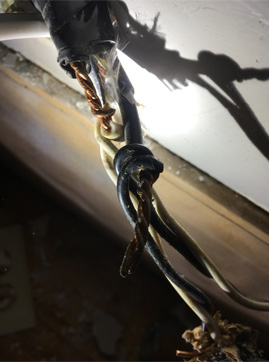
Short answer: It can be, if untouched and maintained, but honestly? In most cases, no — and we're not saying that to scare you into a job. Like us humans, K&T gets creaky with age (after 80+ years, who wouldn't?). The cloth insulation dries out, cracks, and can arc; no ground means shock risks (imagine zapping your coffee maker — ouch!); and it can't support today's gadgets without overheating.
We've seen it in countless Kitchener-Waterloo renos: deteriorated wires causing fires or just plain failing during a family movie night. ESA says it's okay if properly installed and not modified, but modifications happen over decades — think DIY additions. Bottom line: For peace of mind, especially with kids or pets, replacement is the smart move. We're fair about it — if it's minimal, we'll say so.
Per ESA guidelines, it's acceptable if maintained — no overloading, good visible condition. But for modern homes, full upgrades make sense.
Insurance Headaches with Knob and Tube in Ontario
Picture this: You're selling your charming Cambridge century home, and bam — the buyer's insurance balks at the K&T. It's happening more in Kitchener-Waterloo's older neighbourhoods and Woodstock's growing market too. Most companies won't issue new policies or renew without upgrades, citing fire risks.
Here's the straight talk from the Electrical Safety Authority (ESA) themselves: Knob and tube wiring can be safe if properly maintained by a licensed pro — no deterioration, no overloading, visible sections in good shape, and proper fuse protection. The Ontario Electrical Safety Code isn't retroactive, so it's not "banned." But in practice? Deteriorated insulation, added loads over decades, or unsafe mods make it risky — and insurers know it.
We always recommend checking ESA's official page on knob and tube. They suggest getting a licensed electrician (that's us!) to assess for damage, rather than a general home inspector.
Quick rundown of top Ontario insurers and their typical stances (2026 — always verify directly):
| Insurer | Policy on K&T | Notes |
|---|---|---|
| Intact | Often refuses or requires full replacement | High risk = no coverage. |
| Desjardins | May insure for 1 year, then mandate update | Temporary for buyers. |
| Aviva | Typically denies | Broker-dependent. |
| The Co-operators | Refuses new policies | Safety priority. |
| TD | Can insure with premium hike | More flexible, but extra cost. |
If denied, specialty options exist but premiums soar. We've helped dozens resolve this before closings — full replacement, ESA permit/inspection, Certificate of Acceptance, and suddenly insurance is happy. We handle the paperwork; you get peace of mind.

How Much Does K&T Removal Cost in 2026?
We believe in upfront pricing — no surprises. Based on our 25+ years and industry averages, for a full replacement, prices are determined by a variety of factors. Whether it's a small Kitchener-Waterloo bungalow, a medium Cambridge two-story, or a larger Woodstock property, it depends on home size and access.
Factors: Square footage, walls to open (only where necessary; we minimize mess), panel upgrade (often needed). Includes permits, ESA inspection, and our cleanup guarantee. Financing available — let's chat about options.
Our Step-by-Step Replacement Process
We pull ESA permits, coordinate rough-in and final inspections, and deliver your Certificate of Acceptance — proof everything meets code. We don't just rip and replace — we plan meticulously to respect your home and schedule.
Free Assessment (1–2 hours) — We inspect your wiring, explain findings honestly.
Custom Quote (24 hours) — Fair price, no hidden fees.
Permits and Prep (1 week) — We handle ESA paperwork.
Disconnect and Remove Old Wiring — Careful extraction, minimal wall cuts.
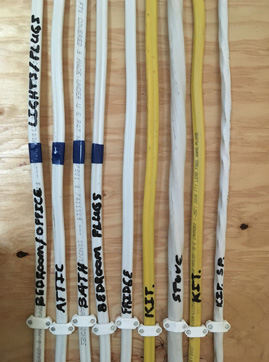
Install New Modern Wiring — Grounded Romex, future-proof.
Connect and Test (1 day) — Everything works perfectly.
ESA Inspection and Cleanup (1 day) — Spotless — like we were ghosts.
Follow-Up — We're here for life — many clients become friends.
Total timeline: 1–3 weeks for most homes. We coordinate with your trades pros for renos.
Knob and Tube FAQs — Straight Answers
Ready to Upgrade?
Call Jeff at 519-740-9999 or text us for a free, no-pressure quote. We've wired hundreds of homes in Kitchener-Waterloo, Cambridge, and Woodstock — let's make yours next.